

Index:
- The $1,000 Decision That Can Protect Tens of Thousands in Perceived Value
- The Concept Most Sellers Miss: Perceived Depreciation vs Actual Depreciation
- The $50,000 Deck Example: How Cleaning Changes Buyer Math
- The Concrete Example: Maintenance Signaling
- The Fence Example: Reversing Visual Aging
- The Project vs Completed Work Principle
- The Perceived Newness Effect
- The Deferred Maintenance Discount
- Why Realtors Recommend Exterior Cleaning Before Listing
- Why Investors Treat Exterior Cleaning as Exit Optimization
- Where Exterior Cleaning Has the Strongest Impact
- When Cleaning Has Less Impact
- The Real Role of Exterior Cleaning in Real Estate
- The Real Financial Case: Preventing Value Leakage
- Conclusion: Cleaning Doesn’t Create Value. It Protects It.

The $1,000 Decision That Can Protect Tens of Thousands in Perceived Value
Most sellers understand the importance of renovations before selling. Kitchens get updated. Bathrooms get refreshed. Walls get painted.
But one of the most financially important pre-listing improvements is often overlooked because it doesn’t feel like an upgrade.
Exterior cleaning.
Not because it adds value in the traditional sense, but because it prevents unnecessary value loss caused by what real estate professionals sometimes call visual depreciation.
A property can be structurally excellent but visually tired. Buyers rarely separate those two things.
They should.
But they don’t.
And that gap between reality and perception is where exterior cleaning becomes financially relevant.
The Concept Most Sellers Miss: Perceived Depreciation vs Actual Depreciation
In appraisal theory, depreciation refers to loss of value from:
Physical deterioration
Functional obsolescence
External factors
But buyers often apply what could be called:
Perceived depreciation
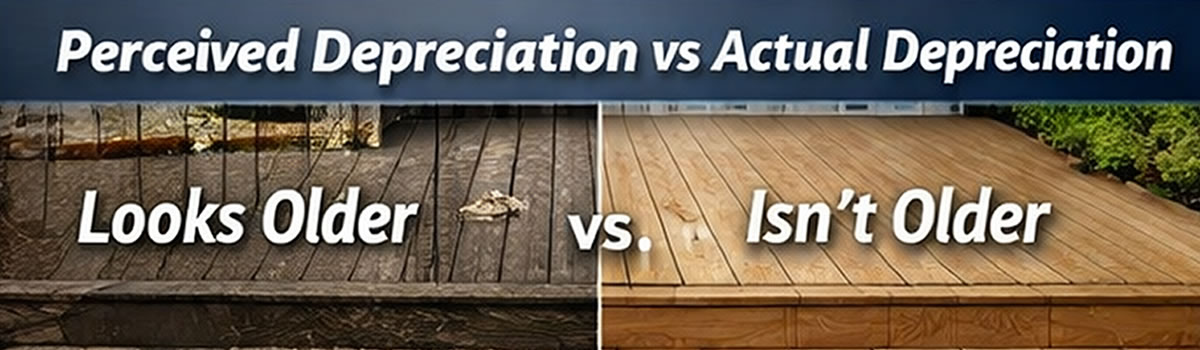
This happens when a property looks older than it actually is.
Examples include:
Grey decking that is structurally sound
Concrete darkened by organic growth
Fences weathered by UV exposure
Siding stained by algae
None of these necessarily indicate structural problems.
But buyers frequently price them as if they do.
This creates what economists would call a pricing inefficiency caused by imperfect information.
Exterior cleaning helps correct that inefficiency.
The $50,000 Deck Example: How Cleaning Changes Buyer Math
Consider a common Niagara scenario.
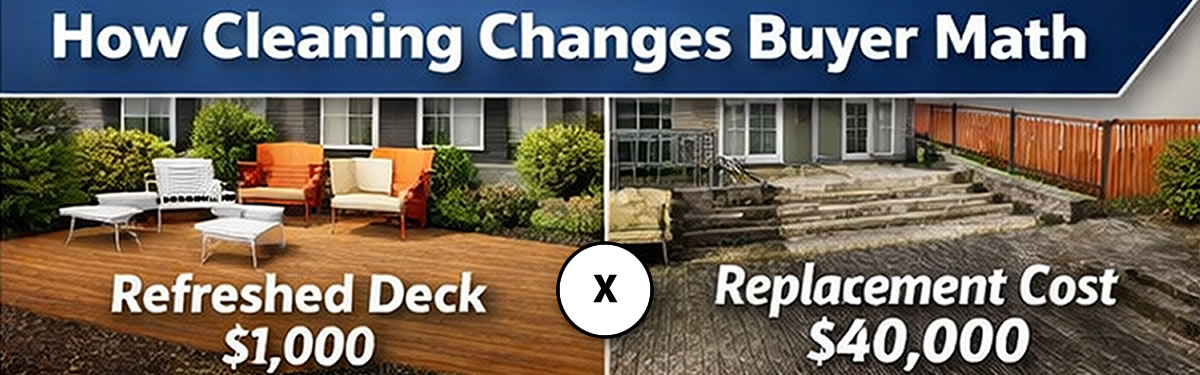
Composite or pressure-treated deck replacement cost:
$35,000 – $60,000 depending on size.
Deck age:
5–8 years
Structural condition:
Good
Visual condition:
- Greying
- Black spotting
- Organic staining
Buyer interpretation:
“This deck is getting old.”
Buyer mental calculation:
Replacement within 5 years.
Perceived future cost:
$20,000 – $40,000
Offer impact:
Lower.
Now consider the same deck after professional cleaning.
Cleaning cost:
$800–$1,500
Visual result:
- Restored color
- Removal of organic staining
- Appearance of newer material
Buyer interpretation changes to:
“This deck looks well maintained.”
Same deck.
Same structure.
Different perceived lifespan.
That difference directly affects how buyers estimate future ownership costs.
And housing prices are heavily influenced by expected future expenses.
Cleaning doesn’t change the deck.
It changes the buyer’s financial projection.


The Concrete Example: Maintenance Signaling

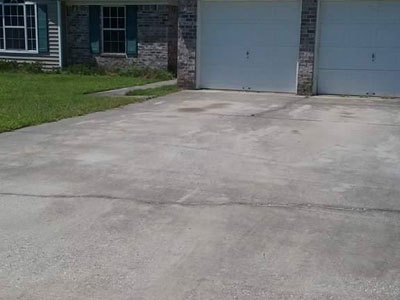
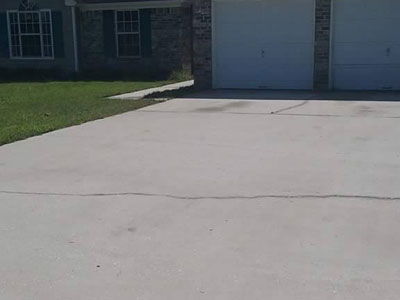
Driveways are one of the strongest visual signals buyers see.
Dirty concrete communicates:
- Neglect
- Deferred maintenance
- Potential hidden issues
Clean concrete communicates:
- Care
- Maintenance
- Pride of ownership
Even though concrete staining is often cosmetic.
Behavioral economics explains this through:
Signal theory.
Buyers assume visible conditions represent invisible conditions.
If exterior surfaces appear neglected, buyers assume interiors may be similar.
If exterior surfaces appear maintained, buyers assume systems may also be maintained.
This affects:
- Offer confidence
- Inspection expectations
- Negotiation strength
Cleaning concrete doesn’t increase structural value.
But it strengthens maintenance signals.
And maintenance signals affect buyer behavior.
The Fence Example: Reversing Visual Aging

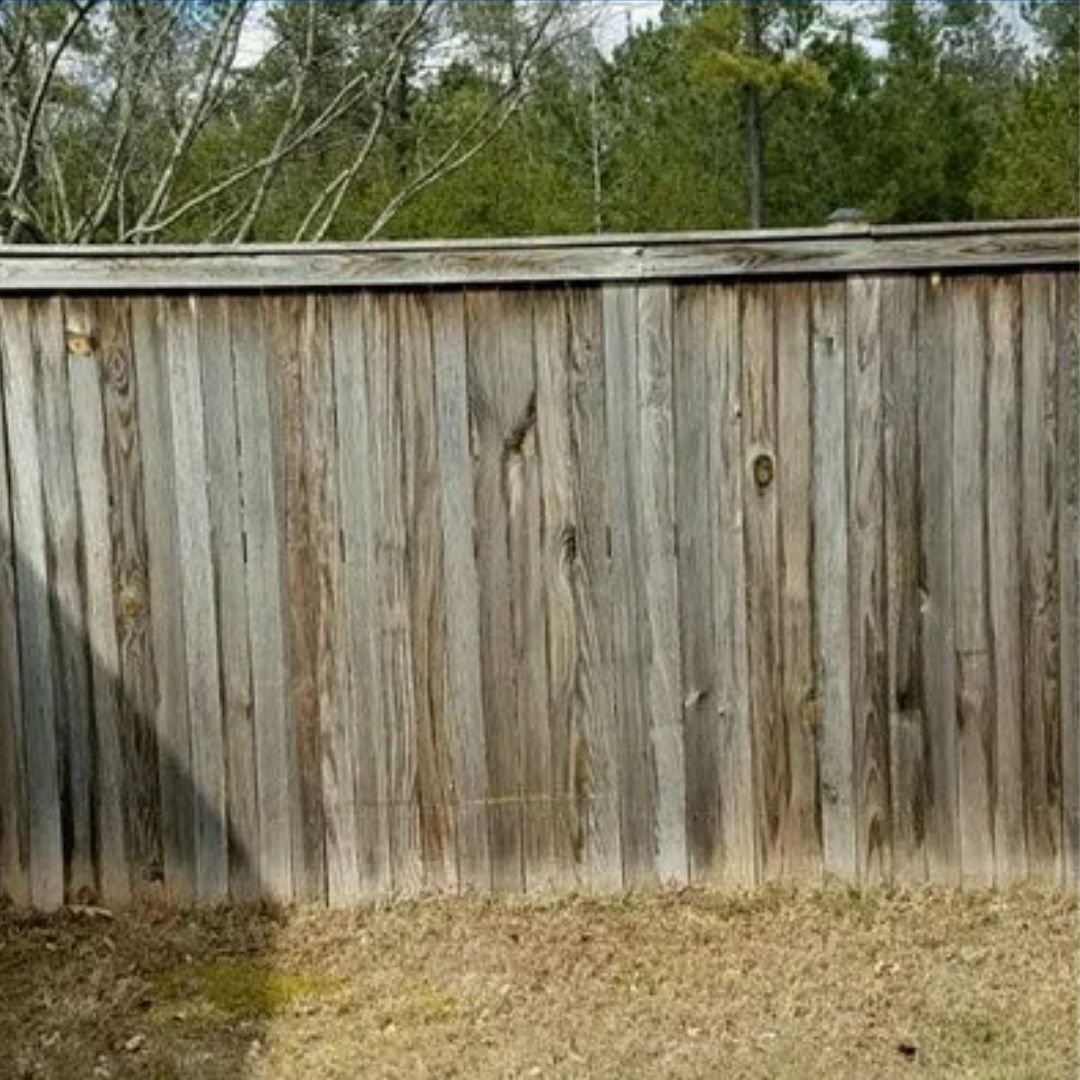
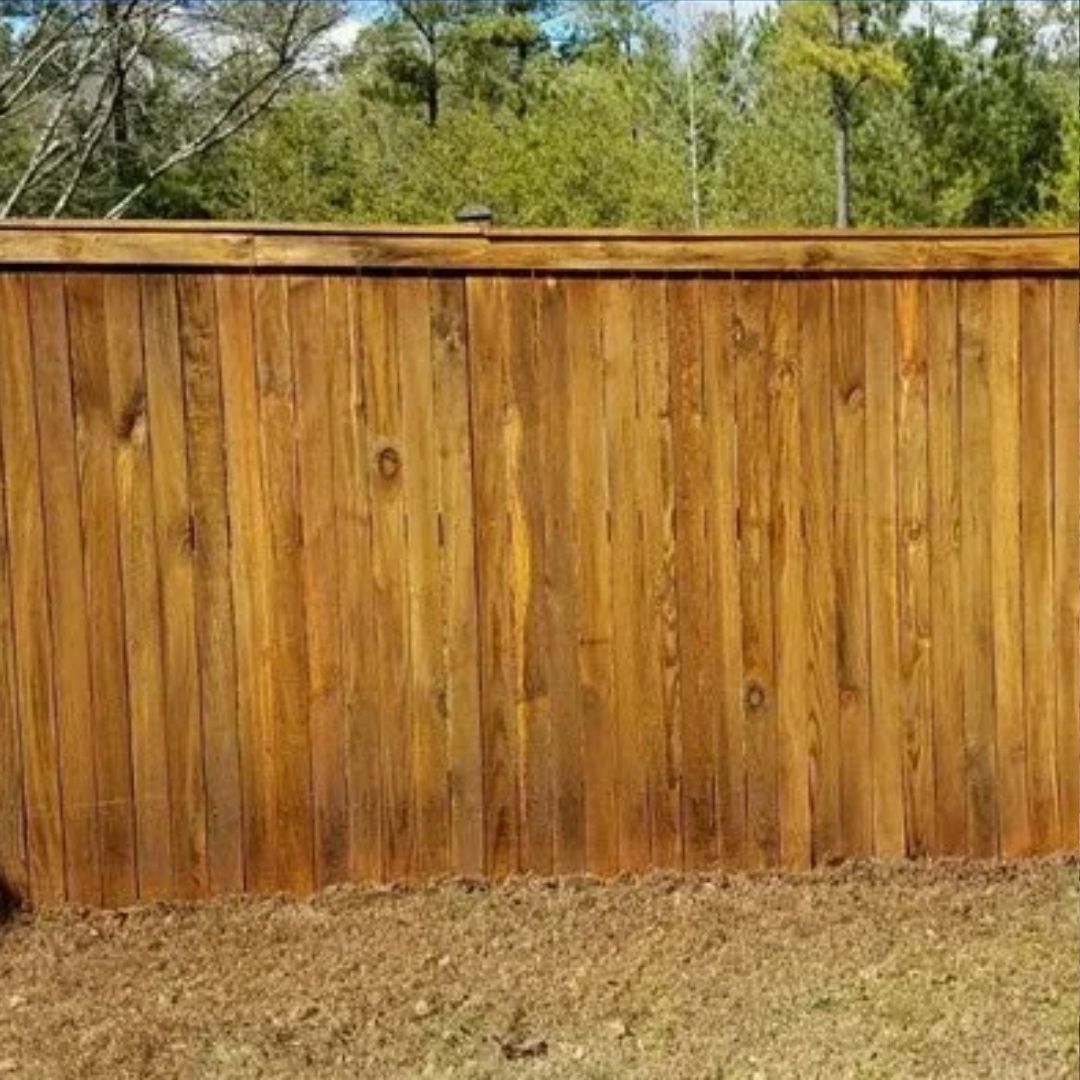
Wood fences present one of the clearest examples of visual depreciation.
A 7-year-old fence may appear:
15 years old when weathered.
After cleaning:
It may appear 3–5 years old.
No structural change occurs.
But perceived remaining lifespan increases.
Buyers unconsciously translate this into:
Lower expected replacement costs.
Again:
Housing prices reflect expectations about future spending.
Cleaning changes expectations.

The Project vs Completed Work Principle
Buyers mentally divide homes into two categories:
Move-in ready
or
Projects
Dirty exterior surfaces frequently push homes into the “project” category even when only cleaning is required.
This is because buyers mentally bundle work together.
They don’t think:
“This just needs cleaning.”
They think:
“This needs work.”
Work equals:
- Time
- Effort
- Risk
Risk reduces offer strength.
Cleaning helps reposition homes into the:
- Completed category
- Where buyers feel comfortable paying stronger prices.
The Perceived Newness Effect
Consumer research consistently shows buyers pay more for products that appear newer even when functionally identical.
This applies to:
Cars
Electronics
Furniture
Housing is no different.
A clean property appears:
Fresher
Maintained
Lower risk
A dirty property appears:
Older
Higher risk
Potentially neglected
This is sometimes referred to in psychology as the halo effect, where one visible positive trait influences overall evaluation.
Cleaning improves the halo.
The Deferred Maintenance Discount

Buyers frequently apply informal discounts when they detect what they believe is deferred maintenance.
This may not appear directly in offer price.
Instead it appears through:
Inspection requests
Repair demands
Price renegotiation
Example:
Buyer sees:
Blackened driveway
Stained siding
Weathered fence
Buyer mindset:
“What else hasn’t been maintained?”
This creates defensive buying behavior.
Cleaning removes these unnecessary triggers.
This does not create value.
It prevents avoidable discounts.
Why Realtors Recommend Exterior Cleaning Before Listing

Experienced listing agents often recommend:
Cleaning
Decluttering
Minor repairs
Staging
Because removing buyer objections improves transaction outcomes.
Exterior cleaning is often one of the simplest objection removal strategies available.
Particularly because it improves:
Listing photos
Showing impressions
Neighborhood comparison
Photos are especially important.
Buyers now see properties online first.
Exterior cleanliness influences click behavior before showings even occur.
Why Investors Treat Exterior Cleaning as Exit Optimization
Professional investors tend to think differently about cleaning.
They rarely view it as maintenance.
They view it as:
Exit preparation.
Interior renovation creates value.
Exterior presentation helps capture that value.
A simple investor example:
After $100k renovation.
Selling price:
$750k target.
Exterior cleaning cost:
$1k
If presentation increases price even 0.5%:
$3,750 gain.
ROI:
Nearly 4X.
But even if price doesn’t change:
If DOM drops 2 weeks:
Carrying cost savings:
$2,000–$3,000
Still profitable.
This is why experienced flippers rarely skip this step.
Where Exterior Cleaning Has the Strongest Impact
Highest visual impact areas:
Driveways
Front walkways
Entry stairs
Siding
Garage doors
Front fences
Why?
These form what could be called:
The buyer approach sequence
The path buyers take toward the home.
Improving this sequence improves:
First impressions
Confidence
Offer psychology
Backyard cleaning helps.
Front approach cleaning matters more.
When Cleaning Has Less Impact
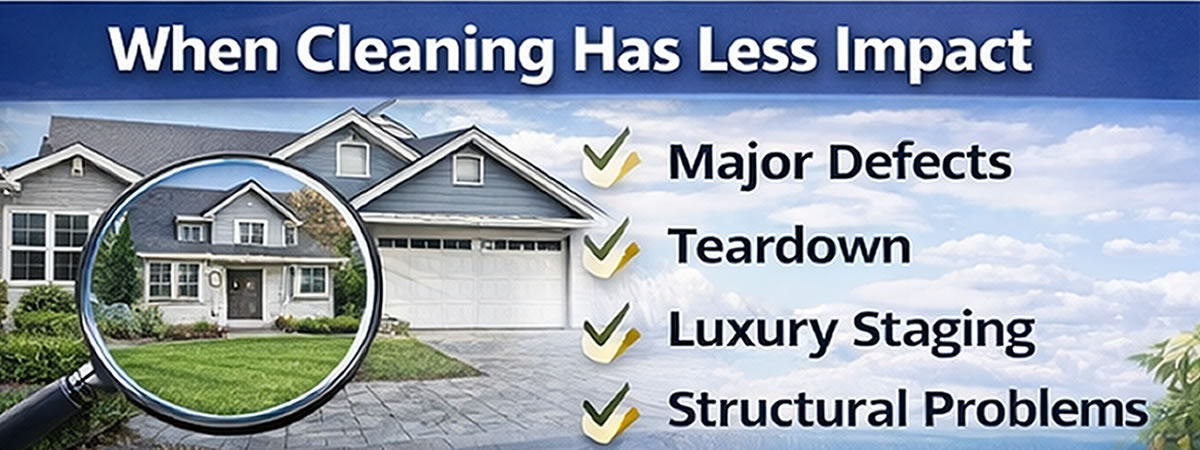
Exterior cleaning has limited effect when:
Major defects dominate perception
Property sold as teardown
Luxury staging overwhelms exterior factors
Structural issues visible
Cleaning works best when:
Visual wear is the main negative signal.
The Real Role of Exterior Cleaning in Real Estate
Exterior cleaning should not be viewed as:
Maintenance.
Nor as:
Renovation.
It is best understood as:
Value presentation.
The purpose is not to change the property.
The purpose is to remove visual noise that interferes with buyer perception.
When buyers clearly see condition, they price more accurately.
The Real Financial Case: Preventing Value Leakage

Most sellers think about:
How to add value.
Fewer think about:
How to avoid losing value.
Exterior cleaning belongs in the second category.
Because:
Losing $15,000 due to poor presentation is easier than gaining $15,000 through renovation.
And much cheaper to prevent.
Conclusion: Cleaning Doesn’t Create Value. It Protects It.

The strongest argument for exterior cleaning is not that it increases property value.
It is that it prevents properties from being undervalued due to cosmetic presentation issues.
That is a much stronger and more defensible claim.
Because real estate markets do not price houses perfectly.
They price what buyers believe they are seeing.
Exterior cleaning helps ensure they see the property as it actually is.
And in real estate transactions, clarity often translates directly into stronger financial outcomes.

Looking for wholesale pricing?
If you list 5+ homes per year that need cleanings we can work out a volume discount at wholesale prices.
"*" indicates required fields